
Crate Training: How to Make the Crate a Place Your Dog Wants to Be
A crate should be a den, not a cell. When done right, crate training gives your dog a safe space they choose to go to on their own. When done wrong, it creates anxiety, frustration, and a dog who panics every time they see the crate come out. The difference comes down to how you introduce it.
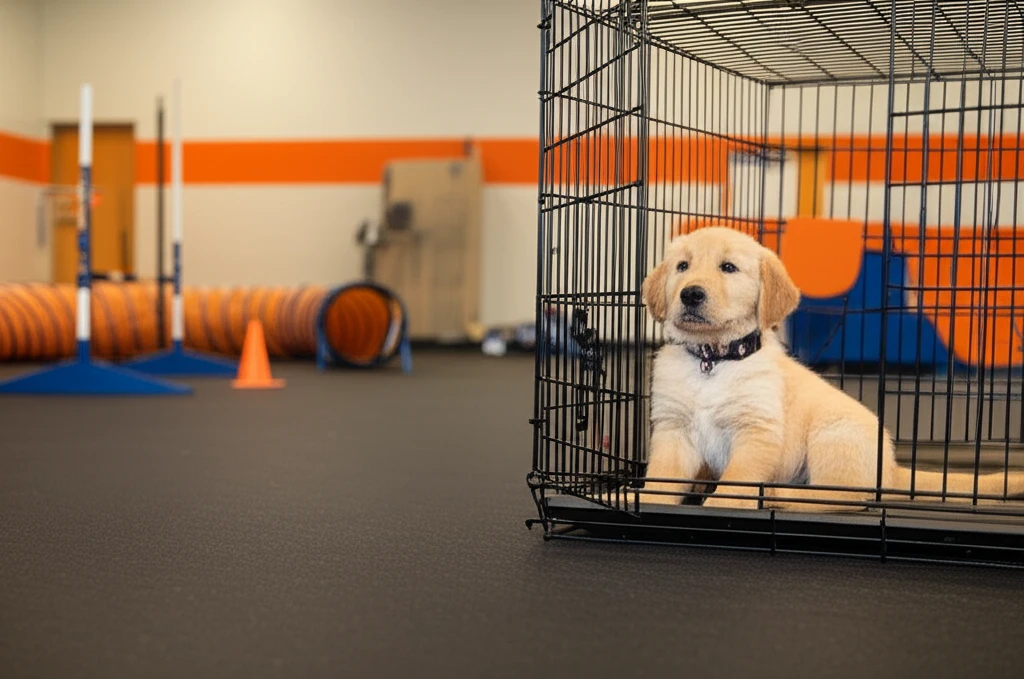
Why Crate Training Matters
A properly crate-trained dog has a skill that pays off in dozens of real-life situations. Veterinary stays, travel, house guests, recovery from surgery, emergency evacuations, hotel rooms on road trips: all of these become dramatically less stressful when your dog can settle calmly in an enclosed space. Crate training also supports two of the most common puppy challenges. It is one of the most effective tools for potty training because dogs naturally avoid soiling their sleeping area. And it builds the foundation for preventing separation anxiety by teaching your dog that being alone in a comfortable space is safe and normal.
The crate is not about containment for your convenience. It is about giving your dog a predictable, secure retreat in a world that can be overwhelming. Watch a well-crate-trained dog during a thunderstorm or when the house gets hectic with visitors. They will often walk into their crate voluntarily, because it feels like the safest spot in the house. That is the goal.
The Mistakes That Make Dogs Hate the Crate
Most crate training failures come from the same handful of mistakes. The most damaging is using the crate as punishment. If you put your dog in the crate when you are angry, when they have had an accident, or as a time-out, you have made the crate a place associated with your frustration. It only takes a few repetitions to poison that association, and it can take weeks of careful work to rebuild it.
The second mistake is going too fast. Closing the door on the first day, leaving the house on the second, and expecting a full workday of crate time by the end of the week is a recipe for a dog who screams, drools, and destroys the crate tray. Your dog needs to build positive associations with the crate gradually, and that means the early days involve the door staying open while treats and meals happen inside.
The third is using the crate for too many hours. A general guideline for puppies is their age in months plus one, in hours. A three-month-old puppy should not be crated for more than four hours during the day. Adult dogs should not be crated for more than six to eight hours at a stretch, and that is the upper limit, not the daily target. If your dog is crated all day while you work and then all night while you sleep, the crate is not a safe space. It is solitary confinement, and the behavioral consequences, from anxiety to hyperactivity to excessive barking, will show up.
Finally, the wrong size crate creates problems. Too large and your puppy may use one end as a bathroom. Too small and your dog cannot stand, turn around, or lie flat comfortably. For puppies, use a crate with a divider panel that you adjust as they grow, or size up as needed.
A Step-by-Step Introduction
Crate training should feel boring. That is a good sign. If it feels dramatic, you are moving too fast. Here is the progression that works for most dogs.
Start with the crate door open, or removed entirely. Place the crate in a room where the family spends time, not in a garage or basement. Toss a few treats inside and let your dog investigate at their own pace. Do not push them in, lure them in with your hand, or close the door behind them. When your dog walks in to get the treats and walks back out, that is a win. Repeat this over a few sessions until they are going in without hesitation.
Next, start feeding meals inside the crate with the door open. Place the food bowl at the back of the crate so your dog walks all the way in. When they are eating comfortably inside, begin closing the door while they eat, and open it the moment they finish. Gradually extend the time the door stays closed after the meal is done, a few seconds at first, then a minute, then several minutes.
Once your dog is relaxed with the door closed for five to ten minutes while you are in the room, start stepping out of sight briefly. Go to the kitchen, come back, open the door calmly. No fanfare on exits or returns. Build the duration of your absences slowly. A stuffed Kong or a safe chew given only in the crate can help your dog form positive associations with alone time inside it.
Add a cue. "Kennel up," "crate," or "go to bed" all work. Say the cue as your dog enters, then reward. After enough repetitions, say the cue before they enter and reward when they go in. Once the cue is reliable, your dog has a skill they will use for life. Dogs who come through puppy socialization programs often pick this up quickly because they have already learned the pattern of cue, behavior, reward.
Crate Training Schedules for Puppies
Puppies need structure, and the crate is the anchor for a daily routine that manages potty training, naps, and supervised play. A typical schedule for a young puppy looks like this: wake up, go outside immediately for a potty break, then supervised play or training for 30 to 60 minutes, then back in the crate for a nap. Puppies sleep 16 to 20 hours a day, and enforced naps in the crate prevent the overtired, mouthy, zooming behavior that owners mistake for hyperactivity.
After each nap, the cycle repeats: potty break, play or training, crate. Meals happen in the crate. Potty breaks happen immediately after meals, naps, and play sessions. This schedule teaches your puppy that the crate is part of the rhythm of the day, not something they get thrown into unpredictably. It also dramatically accelerates potty training because you are managing your puppy's access to the house and catching every opportunity for them to succeed outside.
Overnight, most puppies can go longer between potty breaks than during the day because their metabolism slows during sleep. An eight-week-old puppy might make it four to five hours overnight. Set an alarm rather than waiting for crying, so you are taking them out before they are desperate. As their bladder capacity grows, you can extend the overnight stretch until they are sleeping through the night.
When the Crate Is Not Working
If your dog panics in the crate, scratching at the door, howling nonstop, drooling excessively, or bending the wire panels trying to escape, that is not a training problem you can push through. Crate panic is a sign that your dog is genuinely distressed, and continuing to force crate time at that level will make the anxiety worse, not better.
First, rule out medical issues. Pain, gastrointestinal discomfort, and urinary tract problems can all make confinement intolerable. Then reassess your approach. If you skipped the gradual introduction, go back to the beginning with the door open and treats. If your dog has a history of fear-based behavior, the crate may need an even slower introduction than usual, and covering three sides with a blanket to create a more den-like feel can help some dogs feel more secure.
For dogs with true separation anxiety, the crate alone is not a solution and can actually make the anxiety worse by adding confinement stress on top of isolation distress. If your dog only panics in the crate when you leave the house but is fine when you are home, that is a separation anxiety issue, not a crate training issue, and it needs a different approach.
If you are stuck, bring the problem to a professional. At Zoom Room, our training programs include crate training guidance as part of puppy and obedience classes. You get hands-on coaching for the introduction process and troubleshooting for specific issues, so you are not guessing at what went wrong. Find a Zoom Room near you to get your crate training on track.
Frequently Asked Questions
How long can I leave my dog in a crate during the day?
For puppies, the general guideline is their age in months plus one, in hours. A four-month-old puppy should not be crated for more than five hours during the day. Adult dogs can handle six to eight hours, but that should be the exception rather than the daily routine. Dogs need exercise, social interaction, and mental stimulation throughout the day. If your schedule requires long crate stretches, consider a dog walker, daycare, or breaking the day up with a midday visit. A dog who spends most of their waking hours crated is likely to develop behavioral issues from the confinement.
Should I cover the crate with a blanket?
Many dogs do settle more easily with a covered crate because it creates a more enclosed, den-like environment that reduces visual stimulation. Covering three sides while leaving the front partially open is a good starting point. Watch your dog's response. If they relax more quickly and sleep more soundly with the cover, keep it. If they seem more anxious or the crate gets too warm, remove it. Some dogs prefer an open crate with full visibility. There is no universal rule. Let your dog's behavior guide you.
My puppy cries in the crate at night. Should I let them cry it out?
Not for young puppies. Crying in the first few nights is often a legitimate need: the puppy has to go outside, they are cold, or they are genuinely frightened in a new environment away from their littermates. Take them out for a quiet potty break with minimal interaction, then put them back. Placing the crate in your bedroom initially so the puppy can hear and smell you helps significantly. As the puppy adjusts over a few nights, brief fussing before settling is normal and you can wait it out. Sustained, panicked screaming is different and means you need to slow down the process.
Need Help with Crate Training?
Zoom Room's puppy and obedience classes include crate training guidance so you get it right from the start. Our trainers coach you through the introduction process and troubleshoot issues specific to your dog.
Find a Zoom Room