
How to Help a Fearful Dog Build Confidence
A dog who flattens against the wall when guests arrive, trembles at the sound of a truck, or refuses to walk past a trash can on the sidewalk is telling you something specific. Fear in dogs is real, it is common, and with the right approach, it can get meaningfully better.
Why Your Dog Is Fearful
Fear in dogs typically comes from one of two places: insufficient early socialization or negative experiences. The critical socialization window closes around 14 to 16 weeks of age, and puppies who were not exposed to a wide range of people, surfaces, sounds, and environments during that period are more likely to find unfamiliar things frightening as adults. Dogs from rescue or shelter backgrounds often fall into this category, though any dog can develop fearful behavior after a bad experience at any age.
What matters is understanding that fear is not a personality flaw. Your dog is not being dramatic or difficult. A dog who cowers, freezes, or tries to flee is experiencing genuine stress. Behaviors like whale eyes, lip licking, yawning, and a tucked tail are appeasement signals, and they are your dog's way of communicating that they are overwhelmed. Learning to read these signals accurately is the first step toward helping.
What Makes Fear Worse
The single biggest mistake people make with fearful dogs is flooding: forcing the dog into the thing they are afraid of, hoping they will "get over it." Dragging a noise-sensitive dog to a fireworks show, pushing a dog who is afraid of strangers into a crowd, or holding a dog in place while someone reaches for them does not build confidence. It confirms the dog's belief that the scary thing is, in fact, dangerous, and it erodes their trust in you.
Punishment makes fear worse too. A dog who growls at an approaching stranger is communicating discomfort. If you punish the growl, you have not removed the fear. You have removed the warning signal, which means the next time your dog feels trapped, they may skip the growl and go straight to a snap or bite. Dogs who are labeled aggressive are often fearful dogs whose earlier warning signals were ignored or punished.
Coddling does not help either. Scooping your dog up and soothing them every time they show fear can inadvertently reinforce the fearful response. The goal is calm, neutral support, not a dramatic rescue.
The Evidence-Based Approach: Desensitization and Counter-Conditioning
The two tools that actually work for fearful dogs are desensitization and counter-conditioning, and they work best together. Desensitization means exposing your dog to the scary trigger at a low enough intensity that they notice it but do not panic. Counter-conditioning means pairing that trigger with something your dog loves, usually high-value treats, so the emotional association shifts from "danger" to "good things happen."
Here is what this looks like in practice. Say your dog is afraid of other dogs. Instead of walking them straight into a busy dog park, you find a distance where your dog can see another dog without shutting down. Maybe that is across a parking lot. At that distance, the other dog appears and treats start flowing. The other dog disappears and the treats stop. Over many repetitions and sessions, you gradually decrease the distance as your dog's comfort grows. This is the foundation of positive reinforcement training applied to emotional responses, and it works because you are changing how your dog feels, not just how they behave.
The key word is gradually. Rushing the process is just flooding with extra steps. Let your dog set the pace.
Building Confidence Through Structured Socialization
Fearful dogs do not need to be sheltered from the world. They need carefully managed exposure to it. That is what structured socialization provides: new experiences introduced at a pace your dog can handle, in an environment where every variable is controlled.
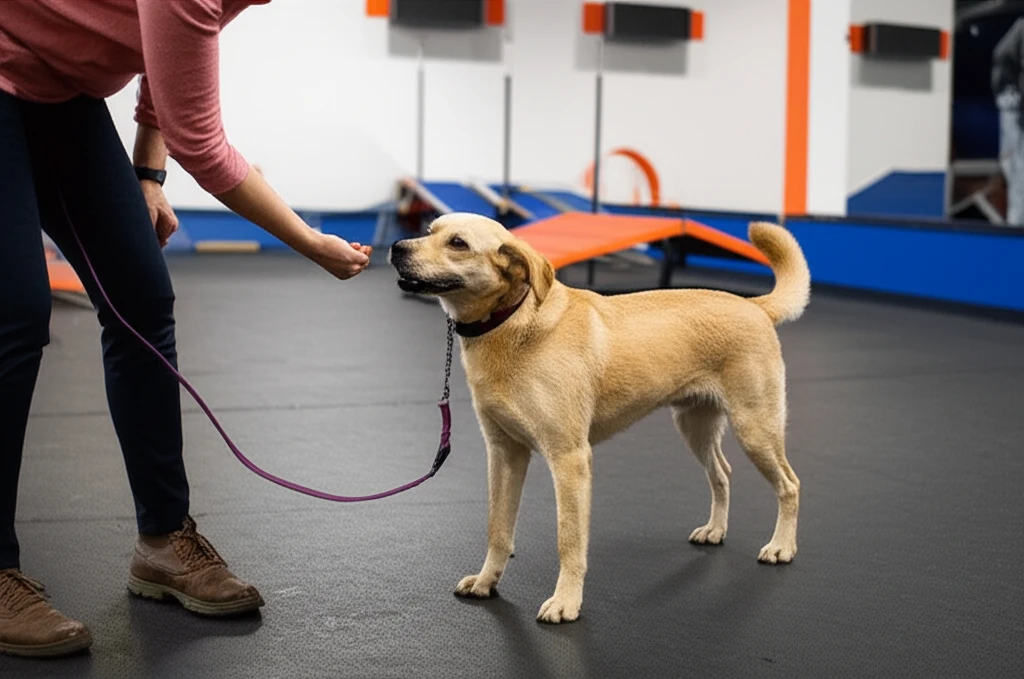
This is where an indoor training gym has a significant advantage over outdoor settings. In a controlled indoor space, there are no surprise off-leash dogs, no sudden loud noises from passing traffic, and no unpredictable strangers reaching for your dog without warning. The trainer manages the environment so your dog can focus on building positive associations instead of scanning for threats.
At Zoom Room, our Shy Dog Workshops are designed specifically for dogs who need a slower, more supportive introduction to group settings. You work alongside your dog with a trainer who understands fear-based behavior, practicing at your dog's threshold rather than pushing past it. Over time, many dogs who started in Shy Dog Workshops graduate into regular socialization classes and group obedience, not because they were forced, but because their confidence genuinely grew.
Your Role in the Process
You are the most important variable in your fearful dog's progress. Dogs read your body language and emotional state constantly. If you tense up, grip the leash tighter, or hold your breath every time a trigger appears, your dog notices, and it confirms that something is wrong. Practicing calm, relaxed body language during exposure exercises makes a real difference.
Managing your dog's environment is equally important. Every time your dog has an overwhelming fear response, it reinforces the neural pathways associated with that fear. Your job between training sessions is to set your dog up for success by avoiding situations they are not ready for yet. That might mean walking at quieter times of day, creating distance from triggers, or politely telling a stranger that your dog is not available for petting.
Progress with fearful dogs is not linear. You will have days where your dog handles something beautifully that scared them a month ago, and days where an old fear seems to resurface. That is normal. What matters is the overall trend. If your dog who once lunged and barked at every dog on the block can now walk past one at twenty feet with a loose leash, that is real, meaningful progress. Find a Zoom Room near you to start building your dog's confidence with professional guidance.
Frequently Asked Questions
Can a fearful adult dog really improve, or is it too late?
Yes, fearful adult dogs can make significant progress. The critical socialization window in puppyhood makes early exposure easiest, but the brain remains capable of forming new associations throughout a dog's life. Adult dogs who have been fearful for years can learn to feel safer around triggers through desensitization and counter-conditioning. The timeline is longer than with a puppy, and the ceiling may be different, but meaningful improvement is realistic with consistent work and professional support.
Should I comfort my dog when they are scared?
Stay calm and neutral rather than dramatically soothing your dog. You cannot reinforce fear the way you reinforce a behavior, but frantic coddling can signal to your dog that the situation really is as bad as they think. Instead, be a steady, reassuring presence. Speak in a normal tone, keep your body relaxed, and gently move your dog to a distance where they feel more comfortable. Then reward calm behavior with treats. Your composure gives your dog information about whether the situation is actually safe.
How long does it take to help a fearful dog?
There is no fixed timeline because the answer depends on the severity of the fear, how long the dog has practiced the fearful response, and how consistently you do the work. Some dogs show noticeable improvement in a few weeks of structured counter-conditioning. Dogs with deep-seated fear or multiple triggers may need several months of steady work. The most important factor is consistency: short, positive training sessions several times a week produce better results than occasional long ones.
Ready to Help Your Dog Feel Safer?
Zoom Room's Shy Dog Workshops and structured socialization classes give fearful dogs the controlled exposure they need to build genuine confidence. You train alongside your dog with a professional who understands fear-based behavior.
Find a Zoom Room