
How to Stop Your Dog from Barking at Everything
The doorbell rings. Your dog erupts. A stranger walks past your window. Your dog erupts. You're on a work call and a leaf blows across the yard. Your dog erupts. You've tried "quiet," you've tried ignoring it, you've tried yelling -- which, if we're being honest, is just joining the bark party.
Why Dogs Bark (It's Not Just Noise)
Excessive barking is one of the most common frustrations dog owners face, and one of the most misunderstood. The typical advice -- "just tell them to stop" -- misses the point entirely. Your dog isn't barking to annoy you. They're barking because something in their world is triggering a response, and they haven't learned a better way to handle it. The good news: once you understand why your dog is barking, the path to quieter days gets a lot clearer.
Barking is communication. Full stop. It's not misbehavior, defiance, or your dog being "bad." It's the primary way dogs express themselves vocally, and it serves a real purpose. The problem is that most people treat all barking the same way, when in reality there are several distinct types -- each with a different cause and a different solution.
- Alert barking: "Something is happening!" The doorbell rings, a stranger approaches, a squirrel commits the unforgivable crime of existing in the front yard. Your dog is letting you know. This is deeply hardwired -- dogs have been alerting humans for thousands of years. The bark is quick, sharp, and directed at the trigger.
- Demand barking: "I want something!" Your dog barks at you for attention, food, play, or to be let outside. It often starts as a single bark and escalates if it works. And here's the thing -- if you've ever responded to demand barking by giving your dog what they wanted, you've taught them that barking is the way to get it.
- Frustration barking: "I can't get to the thing!" This happens when your dog is behind a barrier -- a fence, a window, a leash -- and can see something they want to reach. It's repetitive, intense, and often accompanied by pulling, lunging, or pacing.
- Fear or anxiety barking: "Go away!" This is reactive barking directed at something your dog finds threatening -- strangers, other dogs, loud noises, unfamiliar environments. The body language is tense: stiff posture, whale eye, weight shifted backward. The bark is meant to create distance between your dog and the scary thing.
- Boredom barking: "Nothing is happening!" A dog left alone with nothing to do will often bark just to hear themselves bark. It's monotonous, repetitive, and usually happens when the dog is under-stimulated -- not enough exercise, no mental enrichment, too much time with nothing going on.
Each type has a different emotional driver. Which is exactly why "just stop barking" never works -- it's like telling someone to stop being hungry without offering food. You have to address the underlying cause.
What Doesn't Work
Before we get to the good stuff, let's clear out the bad advice that's been floating around for decades.
- Yelling "quiet!" or "no!" From your dog's perspective, you're barking back. You're loud, you're intense, you're clearly also upset about whatever is happening. This confirms there's something worth barking about. Congratulations -- you've joined the bark party.
- Punishment. Scolding, leash corrections, or physical intimidation in response to barking creates stress and anxiety. Dogs who are punished for barking often develop more anxiety, which leads to -- you guessed it -- more barking. You've now made the problem worse while also damaging your dog's trust in you.
- Bark collars. Citronella collars, shock collars, and ultrasonic devices suppress the symptom without addressing the cause. A dog who's barking out of fear and gets shocked for it is now fearful AND in pain. The barking may stop temporarily, but the underlying anxiety intensifies, often emerging as new problem behaviors -- destructiveness, aggression, or learned helplessness.
- Ignoring it entirely. This is actually good advice -- but only for demand barking. If your dog barks for attention and you consistently ignore it, the behavior will eventually extinguish. But ignoring alert barking or fear barking doesn't work, because the trigger is external and your dog needs help learning how to cope with it.
What Actually Works
The single most important step is identifying what type of barking you're dealing with. Once you know the cause, you can apply the right approach. Here's how to handle each one.
- Alert barking: Acknowledge, then redirect. Your dog is doing their job -- they noticed something and told you about it. The fix isn't to punish the alert; it's to thank them and then give them something else to do. Try this: when your dog barks at the door, calmly say "thank you" (yes, really), then cue a known behavior like "go to your place" or "sit." When they comply, reward. Over time, your dog learns the sequence: notice thing, bark once or twice, go settle. The alert gets acknowledged. The ongoing barking stops.
- Demand barking: Remove the reinforcement. If your dog barks at you for attention, the fix is simple (though not easy): give them absolutely nothing. No eye contact, no "shh," no response at all. Turn away. Wait. The moment they're quiet -- even for two seconds -- mark it and reward. You're teaching them that silence gets results and barking gets nothing. Expect it to get worse before it gets better. That's called an extinction burst, and it means it's working.
- Frustration and reactivity barking: Change the emotional response. This is counter-conditioning -- you're changing how your dog feels about the trigger rather than just suppressing the behavior. When your dog notices the trigger (another dog, a person, a bike) at a distance where they're aware but not yet barking, feed high-value treats rapidly. Over many repetitions, the dog starts to associate the trigger with good things instead of frustration or fear. Distance is your friend here. If your dog is already over threshold and barking, you're too close.
- Fear barking: Create distance and build confidence. A fearful dog needs space, not correction. When your dog barks out of fear, increase the distance from the trigger. Then, gradually and systematically, pair the trigger with something your dog loves -- treats, play, praise -- at a distance where they can notice it without panicking. This takes time. Weeks, sometimes months. But it works because you're addressing the root emotion, not just the noise. Early socialization is one of the best preventive measures for fear-based barking later in life.
- Boredom barking: Enrich the environment. A dog who barks out of boredom needs more to do. Puzzle toys, snuffle mats, frozen Kongs, structured training sessions, and regular physical exercise all help. If your dog has an outlet for their mental and physical energy, they're far less likely to fill the void with barking. Think of it this way: a tired, mentally satisfied dog is a quiet dog.
For all types of barking, one principle applies across the board: reward the absence of barking. Most people wait until their dog barks to react, which means the dog only gets attention (even negative attention) for being loud. Flip the script. When your dog notices a trigger and doesn't bark? That's the moment to reward. When your dog is lying quietly while you work? Treat. When the doorbell rings and they look at you instead of losing their mind? Jackpot.
"Quiet" isn't a cue most dogs understand -- you can't explain a concept like silence to a dog with a word. But dogs are brilliant at learning what behaviors pay off. If silence pays better than barking, they'll choose silence.
The Bigger Picture
A dog who barks at everything is often a dog whose world feels unpredictable. Every new sound, person, or movement is a potential threat or source of frustration because they haven't learned that most of the world is boring and safe. That's where the real work happens -- not in suppressing the bark, but in building a dog who doesn't feel the need to bark in the first place.
Socialization builds familiarity. Familiarity reduces alert and fear triggers. A dog who has been positively exposed to doorbells, delivery drivers, other dogs, skateboards, and all the other everyday chaos of the human world simply has less to bark about.
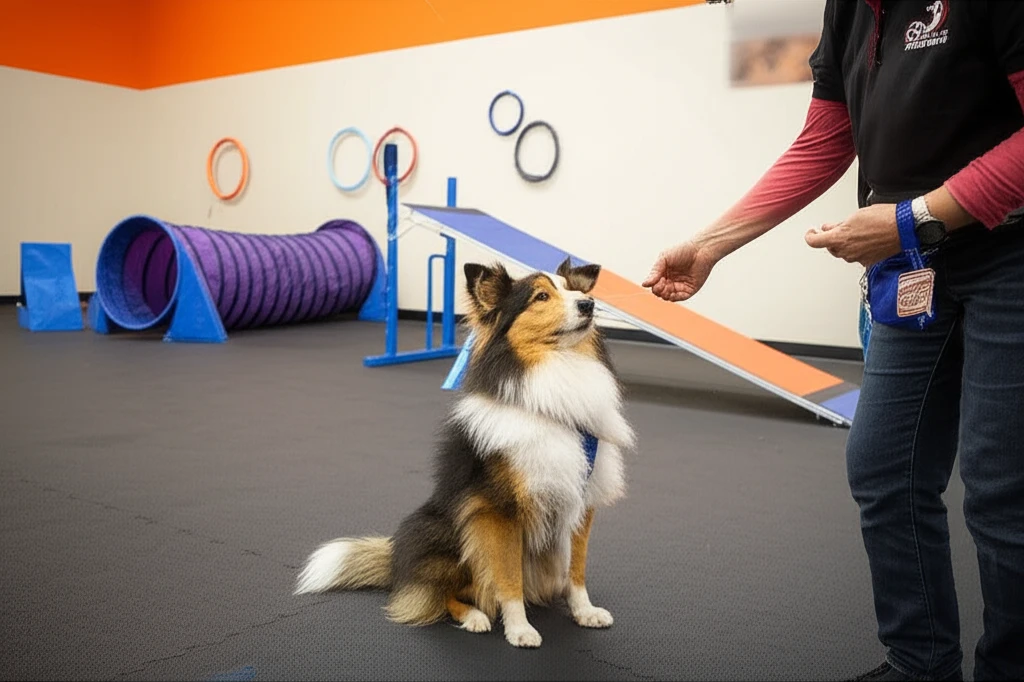
Dogs with regular structured activities -- training classes, agility, nose work, even daily obedience practice -- bark less because they're mentally satisfied. They have a job. They have an outlet. They don't need to manufacture excitement by barking at the mail carrier.
The real fix for excessive barking isn't finding a way to silence your dog. It's giving them fewer reasons to bark, better tools to cope when they do feel the urge, and consistent reinforcement for making the quiet choice. That takes patience. It takes consistency. But it works -- and unlike yelling back, it actually makes your relationship with your dog stronger in the process.
Jumping and barking often go hand in hand -- both are signs of a dog who hasn't learned impulse control. Addressing one frequently helps with the other, because the underlying skill is the same: teaching your dog to pause and choose a better behavior instead of reacting on instinct.
Frequently Asked Questions
Is it realistic to expect my dog to never bark?
No, and that is not the goal. Barking is a natural form of communication for dogs, and eliminating it entirely would be neither realistic nor fair. The goal is to reduce excessive, prolonged, or inappropriate barking by addressing its underlying cause. A dog who barks once or twice to alert you to someone at the door and then settles is doing exactly what you want. The focus should be on teaching your dog when to stop barking and giving them alternative behaviors, not on silencing them completely.
My dog barks when I leave the house. Is that the same as excessive barking?
Barking that starts shortly after you leave and continues for extended periods is more likely a sign of separation anxiety than general excessive barking. The key distinction is the trigger: if the barking is specifically tied to your departure and your dog shows other signs of distress like destruction near exits, house soiling, or pacing, the issue is anxiety about being alone rather than a barking habit. Separation anxiety requires a different approach focused on gradual desensitization to departures and building your dog's confidence during alone-time.
Do certain breeds bark more than others?
Yes, some breeds were selectively bred for vocalization. Herding breeds, terriers, and hounds tend to be more vocal than average because barking served a functional purpose in the work they were bred to do. However, breed tendency does not mean the behavior is unmanageable. Any dog, regardless of breed, can learn when barking is appropriate and when quiet behavior is more rewarding. The approach is the same: identify the type of barking, address the underlying motivation, and consistently reinforce the behavior you want to see more of.
Ready to get started?
Our group classes teach real-world skills -- including how to stay calm when the world gets loud.
Find a Zoom Room