
Your Dog Isn't Punishing You for Leaving — They're Panicking
You come home to a destroyed crate, scratched-up door frame, a puddle on the floor, and a dog who's trembling. Your neighbor mentions the howling started about ten minutes after you left and went on for two hours. This isn't spite. This isn't your dog getting back at you. This is separation anxiety, and your dog is genuinely distressed.
What Separation Anxiety Actually Is
Separation anxiety is one of the most common behavioral issues dog owners face, and one of the most misunderstood. The damage, the noise, the house soiling -- these aren't signs of a bad dog. They're signs of a dog in panic. Understanding what's actually happening is the first step toward helping both of you.
Separation anxiety is a genuine panic response triggered when a dog is separated from their primary attachment figure -- usually you. It's not boredom. It's not defiance. It's not your dog "knowing what they did" and feeling guilty when you walk through the door. That flattened posture and averted gaze you see when you come home to destruction? That's a stress response to your body language, not remorse.
The signs are fairly distinct. Dogs with separation anxiety tend to focus their destruction near exits -- scratching at doors, chewing window frames, digging at thresholds. They vocalize intensely: sustained howling, barking, or whining that starts shortly after you leave and doesn't let up. House soiling happens even in dogs who are otherwise perfectly house-trained. You might also see pacing, excessive drooling, panting, and escape attempts that can sometimes result in broken teeth or torn nails.
The severity ranges widely. Some dogs show mild unease -- a little whining, some restlessness -- while others experience full-blown panic that can lead to self-injury. It's important to distinguish separation anxiety from boredom-based destruction, which tends to look different. A bored dog might chew a shoe or knock over the trash. A dog in separation distress is laser-focused on getting to you, and the damage clusters around doors, windows, and crates.
Why It Happens
Separation anxiety often develops in dogs whose entire world is built around one person in one house. When you are everything -- the sole source of safety, stimulation, social contact, and routine -- your absence doesn't just create boredom. It creates a vacuum. The dog's entire sense of security disappears when you walk out the door.
Dogs who lack a broader social life are more vulnerable. If your dog rarely meets other people, seldom visits new places, and has few experiences outside the home, they become heavily dependent on the one constant they do have: you. That dependency can tip into anxiety when the constant is removed.
Changes in routine are common triggers. A new work schedule, a move to a new home, a family member leaving for college, a divorce -- any shift that alters the pattern your dog relies on can spark or worsen separation distress. Rescue dogs carry additional risk, especially those with a history of abandonment, rehoming, or time in shelters. They've already learned that people leave, and they don't always come back.
And then there are dogs who were simply never taught that being alone is safe. If your dog has been with you or another person every moment of their life, they've never had the chance to learn that solitude is survivable. When it finally happens -- and it always does eventually -- they don't have the coping skills to handle it.
What Doesn't Work
Before talking about solutions, it's worth addressing the approaches that sound logical but don't help -- and can make things worse.
Getting a second dog. This is one of the most common suggestions, and it almost never solves the problem. Separation anxiety is about attachment to you, not about loneliness in a general sense. Your dog isn't panicking because they're alone. They're panicking because you are gone. A second dog in the room doesn't change that equation. You may end up with two dogs and the same problem.
Punishment. Coming home to a destroyed room is frustrating. The urge to scold is understandable. But your dog cannot connect a correction delivered now to a behavior that happened two hours ago. Dogs live in the immediate present. When you walk in angry, your dog reads your tension and responds with appeasement signals -- not because they feel guilty, but because you're upset and they're trying to defuse the situation. Punishment after the fact teaches nothing about the destruction. It only teaches your dog that your homecoming is unpredictable and stressful, which layers more anxiety on top of what's already there.
Letting them cry it out. This approach is sometimes called "flooding" in behavioral terms, and it doesn't build resilience. It overwhelms the dog's ability to cope, can intensify the panic response, and may cause the anxiety to generalize to other situations. A dog who was anxious about your departure may become anxious about the car keys, the sound of your shoes, or the act of you standing up from the couch.
Crating a truly panicked dog. Crates work beautifully for many dogs and many situations. But for a dog in the grip of genuine separation panic, a crate can become dangerous. Dogs have broken teeth on crate bars, torn out nails trying to dig through the bottom, and injured themselves thrashing against the walls. If your dog's anxiety is severe, the crate may do more harm than good. This doesn't mean crates are bad -- it means the anxiety needs to be addressed before confinement is safe.
What Actually Helps
The core principle is straightforward: teach your dog, gradually and at their pace, that your absence is safe and survivable. The execution takes patience, consistency, and time.
Desensitization to departures. This is the foundation of separation anxiety work. You start absurdly small. Pick up your keys, then put them down. Walk to the door, then walk away. Open the door, close it, stay inside. Step outside for five seconds, come back in calmly. The goal is to keep your dog below their anxiety threshold at every step. If they're calm at five seconds, try ten. Then thirty. Then a minute. Build duration so gradually that your dog barely notices the increments. This is slow work -- measured in weeks, sometimes months -- but it rewires the dog's emotional response to your departure cues.
Make departures boring. Long, emotional goodbyes feel kind to us but ramp up arousal in your dog. The same goes for dramatic, excited homecomings. Keep both low-key. Walk out without fanfare. Walk back in the same way. You want departures and arrivals to become non-events rather than emotional peaks.
Enrich alone-time. Give your dog something genuinely engaging to do when you leave. A frozen Kong stuffed with peanut butter, a puzzle toy that dispenses treats, a snuffle mat, calming music or white noise in the background. These don't solve separation anxiety on their own, but they help create a positive association with your departure and give the dog something to focus on during those first critical minutes.
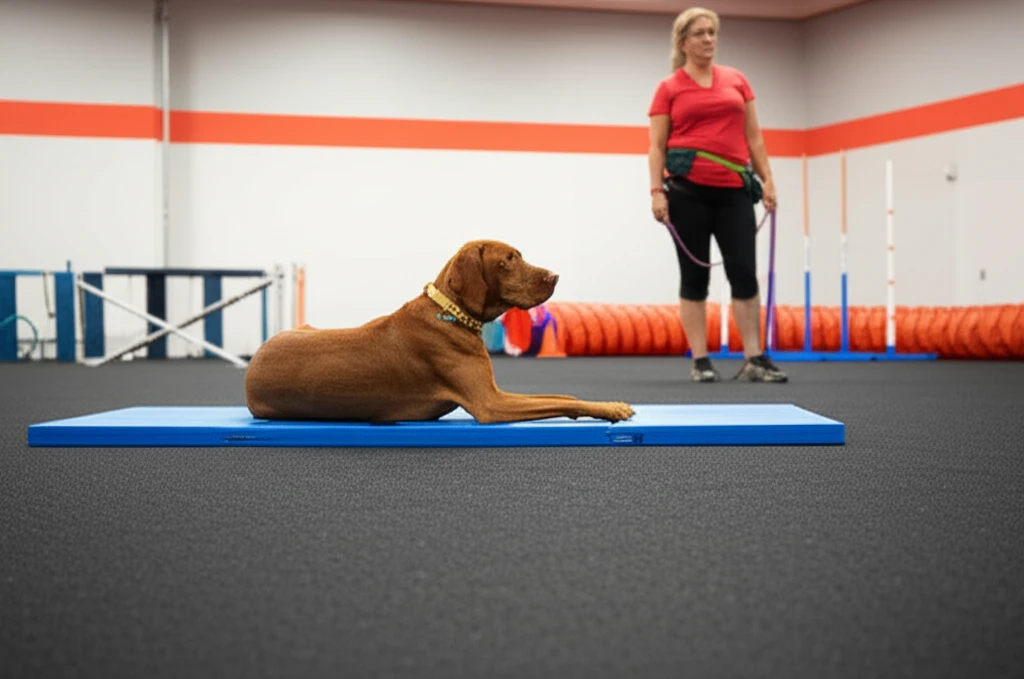
Build independence at home. Teach your dog to settle on a mat or bed while you move to another room. Practice closing a door between you for short periods. Reward calm, relaxed behavior when your dog chooses to lie down away from you rather than following you from room to room. This isn't about rejecting your dog -- it's about building their confidence that they can exist without being physically attached to you at all times. Positive reinforcement makes this process feel safe rather than isolating.
Broaden their world. This is where the deeper work happens. Dogs with wider social lives -- dogs who know other people, have been to different places, have routines that include experiences beyond the home -- handle alone-time better. Their sense of safety isn't entirely dependent on one person in one location. Socialization builds a broader foundation of confidence. When your dog's world includes regular outings, group training classes, time with different people, and varied environments, your absence is less catastrophic. You're one important part of a bigger, richer life rather than the only part.
Professional help for severe cases. If your dog is injuring themselves, if the destruction is extreme, or if the anxiety doesn't respond to gradual desensitization, consult a veterinary behaviorist. Severe separation anxiety is a clinical condition, and some dogs benefit from medication alongside behavioral work. This isn't a failure -- it's recognizing that some brains need chemical support to get to a place where learning is possible. A behaviorist can create a tailored protocol and determine whether medication might help your dog get past the panic threshold so that training can actually take hold.
The Bigger Picture
Separation anxiety often tells a story about a dog whose world is too small. When everything that matters -- safety, comfort, stimulation, companionship -- comes from a single source, losing access to that source feels like losing everything. The solution isn't just desensitization exercises, though those matter. The deeper solution is building a life for your dog that's broad enough and rich enough that your temporary absence doesn't collapse their entire sense of security.
That means socialization. It means varied experiences. It means other people, other places, other routines. It means teaching your dog that the world is generally safe, not just safe when you're in it.
This isn't a quick fix. Progress is measured in weeks, not days, and setbacks are normal. But dogs of any age can improve. The panic your dog feels right now isn't permanent. With patience, consistency, and a plan, you can help them learn that being alone isn't the end of the world -- it's just a pause before you come back.
And you will always come back. They just need to learn to believe it.
Frequently Asked Questions
Can separation anxiety develop suddenly in an adult dog?
Yes. A dog who previously handled alone-time well can develop separation anxiety after a major change in routine or environment. Common triggers include a move to a new home, a shift in your work schedule, a family member leaving the household, or a traumatic experience while alone such as a thunderstorm or break-in. Rescue dogs are especially susceptible after rehoming. The good news is that the desensitization process works the same way regardless of when the anxiety started. Identifying and addressing the trigger, combined with gradual departure practice, helps most dogs regain their confidence.
How can I tell if my dog has separation anxiety or is just bored?
The pattern of destruction is the clearest indicator. A bored dog tends to chew whatever is accessible and interesting -- shoes, pillows, remote controls. A dog with separation anxiety focuses their destruction around exits: scratching at doors, chewing window frames, digging at thresholds. Separation anxiety also typically involves sustained vocalization that starts shortly after you leave and continues for extended periods, house soiling in otherwise house-trained dogs, and visible signs of distress like excessive drooling or panting. Setting up a camera to observe your dog's behavior after you leave is one of the most helpful diagnostic steps you can take.
Will group training classes help a dog with separation anxiety?
Group classes address one of the root causes of separation anxiety: a world that is too small. Dogs who regularly attend training classes gain exposure to new people, new dogs, and new environments. This broadens their sense of security beyond just you and your home. The confidence they build in class -- learning new skills, navigating social situations, succeeding in a stimulating environment -- carries over into their ability to handle being alone. Classes are not a standalone treatment for severe separation anxiety, but they are an important part of building the kind of rich, varied life that makes alone-time less overwhelming.
A Bigger World Starts Here
Group classes give your dog new people, new dogs, and new confidence -- the kind that makes alone-time easier.
Find a Zoom Room